The short answer: aerate Bermuda and Zoysia while they're growing hard. In North Alabama that's mid/late April through August, once the lawn is fully green. Most lawns need it once a year, and busy or packed-clay yards twice. Don't aerate them in fall, and don't seed fescue into them.
The rest of this post is the reasoning, because each of those rules has an exception.
Why warm-season timing is different
Bermuda and Zoysia grow from runners. Bermuda spreads by stolons above ground and rhizomes below. Clemson Extension says it spreads "very rapidly," fast enough to be hard to keep out of flower beds. That's the trait aeration takes advantage of. Every hole is a pocket of loose soil for a runner to root into.
But runners only move when the grass is growing. The Alabama Cooperative Extension System puts it plainly: aerate when the grass is actively growing, and for warm-season lawns that means summer. Aerate a dormant or half-dormant lawn and nothing fills the holes except weeds.
When to start: soil temperature, not the calendar
"Mid/late April" is a North Alabama average. Your lawn decides the real date.
The most useful number here comes from UGA Extension: for warm-season grasses, aerate when the soil at a 4-inch depth is at least 65°F and rising. A cheap soil thermometer pushed 4 inches down in the late morning tells you more than the date. Two or three readings over a week tell you whether it's rising or just had one warm day.
The low-tech check: mow it. If the lawn is uniformly green after mowing, with no tan patches of last year's leaves showing through, it's growing. If you're still mowing brown, wait.
A Bermuda lawn calendar from UGA Extension marks May through August as the best months to core aerate, with April and September as possible. That calendar comes from Colquitt County in south Georgia, which warms up earlier and stays warm later than the Tennessee Valley. Shift it a little later in spring and a little earlier in fall for North Alabama. That's how you land on mid/late April to August.
The pre-emergent trap
Plenty of Bermuda lawns get a spring pre-emergent for crabgrass. Clemson's Bermuda calendar warns that if a pre-emergent went down in late February to mid-March, you should hold off on anything that disturbs the soil until just before the next application is due. Aerating through the barrier opens a path for weeds.
In practice, if you or your lawn service schedules a split pre-emergent, time aeration right before the second round. If you don't know when it went down, ask.
How often to aerate Bermuda grass
Here's where extension sources honestly disagree with a lot of lawn marketing.
ACES says aeration on a home lawn is generally a fix for compaction, not routine maintenance. UGA says the average lawn benefits from yearly aeration but can do well aerated every 3 to 4 years. Clemson says "as often as needed," from once every couple of years up to 2 to 4 times a growing season on heavy, poorly drained soil with a lot of traffic.
That's a wide range, and it's wide because yards are. North Alabama puts most lawns toward the busy end: red clay that packs hard, summers that bake it, and newer subdivisions where sod went down on graded subsoil. For a typical Bermuda lawn here, once a year during the growing season is a solid default. Kids, dogs, a parked trailer, or a new build with packed clay argue for twice, spaced several weeks apart.
Don't guess. Clemson's screwdriver test works on Bermuda too: push a screwdriver into moist soil. Easy means you can probably skip a year. A fight means aerate.
Thatch is part of the answer
Bermuda builds thatch because it grows so fast. ACES calls more than 1 inch of thatch excessive, and lists core aerators among the machines that help control it. Zoysia builds thatch too, even though it grows slowly, because its tissue breaks down slowly. If you can pull back a spongy layer with your fingers, that's another reason to aerate on schedule.
Can you aerate Zoysia in the fall?
In North Alabama, no. By October it's the wrong move for two reasons.
Zoysia is slow. Clemson notes that most Zoysia varieties grow "very slowly" compared to other grasses. Holes that Bermuda would close in a few weeks take Zoysia a lot longer.
Winter is coming. Clemson says Zoysia grows vigorously in the 80 to 95°F months and turns brown with the first fall frost. Aerate in October and the lawn has almost no growing time left. The holes sit open through winter, and cool-season weeds find them first.
So the rule for Zoysia is the Bermuda window, but earlier. Late spring and early summer give it the longest runway to recover. August is the last call.
Bermuda follows the same logic. It's faster, but by fall it's slowing down for winter too.
Overseeding Bermuda with fescue: why the answer is no
This comes up every fall, because the fescue lawns down the street are getting aerated and seeded, and it looks like a good idea.
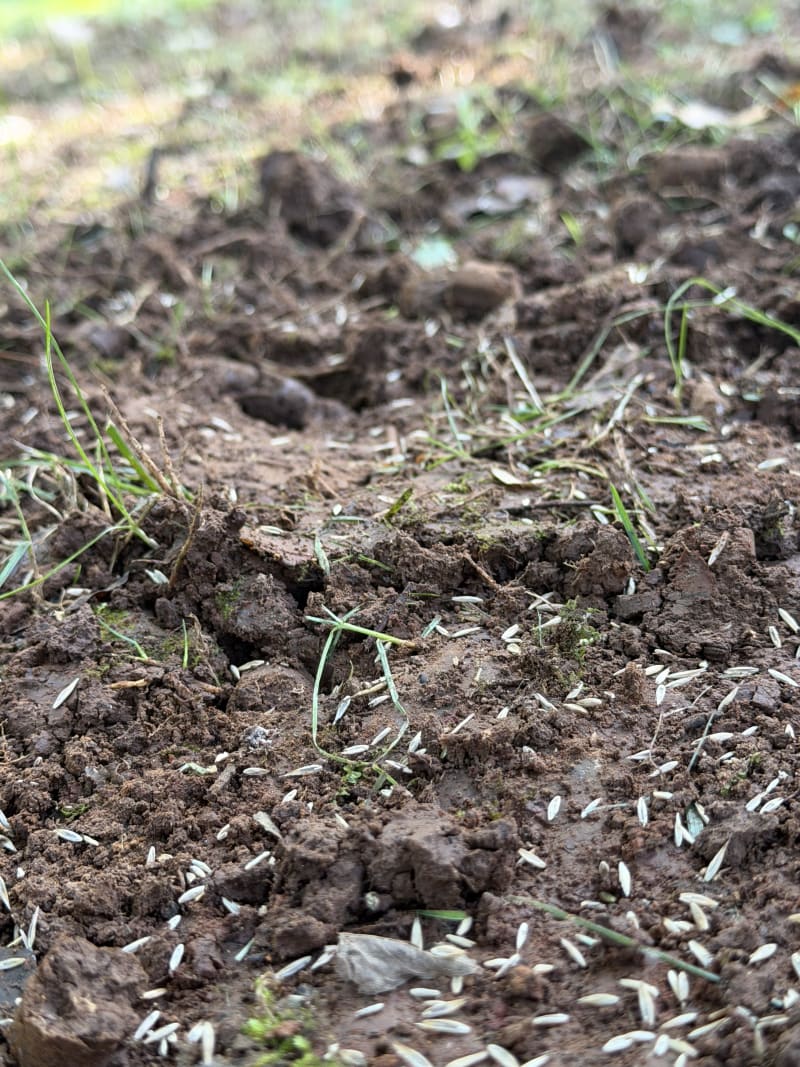
It isn't. ACES describes tall fescue as a bunch grass with a "bunching growth habit, limited ability to spread, and summer-induced thinning." Put that into a Bermuda lawn and here's the year you get:
- Fall and winter: the fescue comes up green while the Bermuda goes dormant tan. You have green clumps scattered across a brown lawn.
- Summer: the Bermuda takes over and the fescue thins in the heat. You're left with coarse, off-color clumps that don't match.
Fescue can't knit into a Bermuda lawn, because it can't spread. It just sits there as clumps.
What about winter color? The overseed that golf courses and athletic fields in Alabama use on dormant Bermuda is perennial ryegrass, not fescue, and ACES lists the downsides: weed control gets harder, and in spring the ryegrass competes with Bermuda coming out of dormancy. That's a deliberate, high-maintenance program, not a way to thicken a home lawn.
The way to thicken Bermuda or Zoysia is to help it spread. Loosen the soil, then feed, water and mow it right during the growing season.
The exception: the shady side of a mixed yard
Clemson says Bermuda has "very poor shade tolerance" and shouldn't be grown under tree canopies. Zoysia handles partial shade better but, per Clemson, often thins in dense shade.
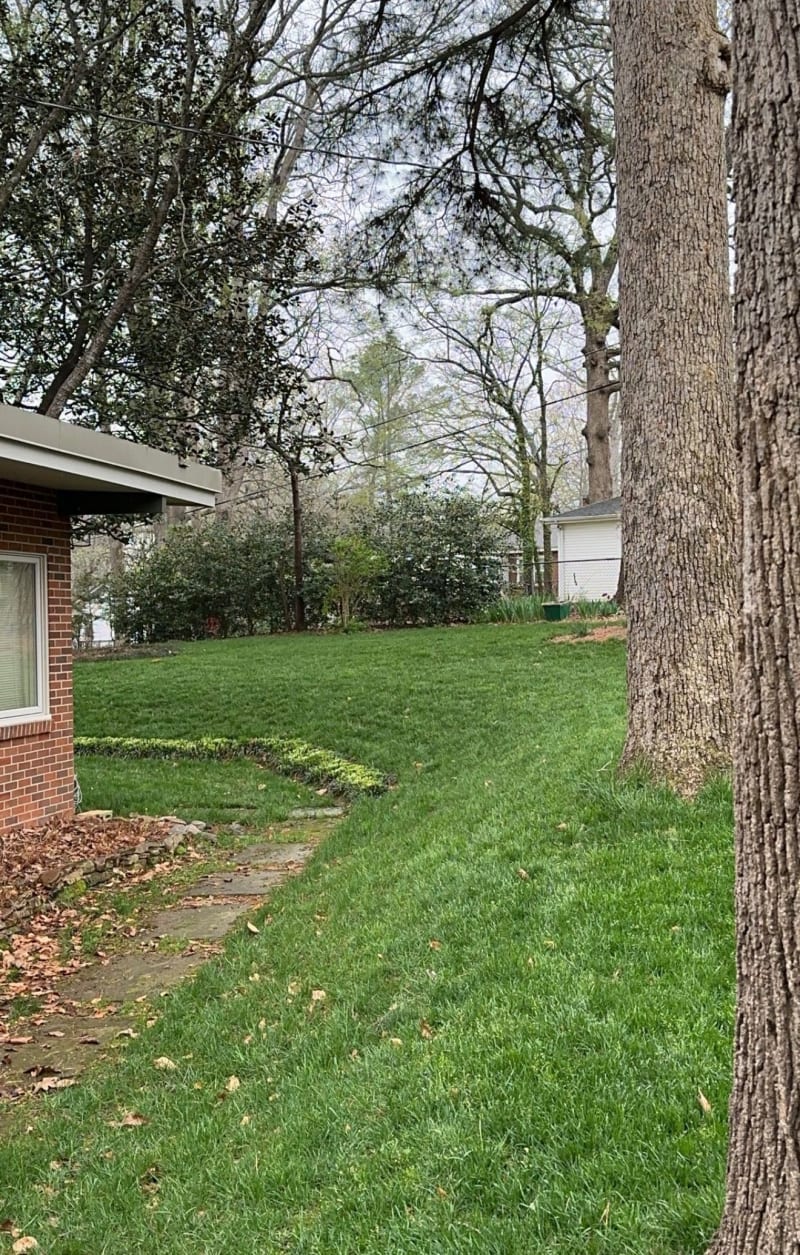
That's why so many North Alabama yards, especially older lots under mature shade trees in Decatur and Hartselle, end up mixed: Bermuda in the sunny front, fescue under the trees out back. Fescue tolerates light to moderate afternoon shade, so in the shade it's a sensible choice.
In a yard like that, treat them as two lawns. The shady fescue section gets aerated and overseeded in fall. See fall aeration and overseeding for fescue. The sunny Bermuda section gets aerated in late spring or summer, and no fescue seed goes into it.
The clay factor
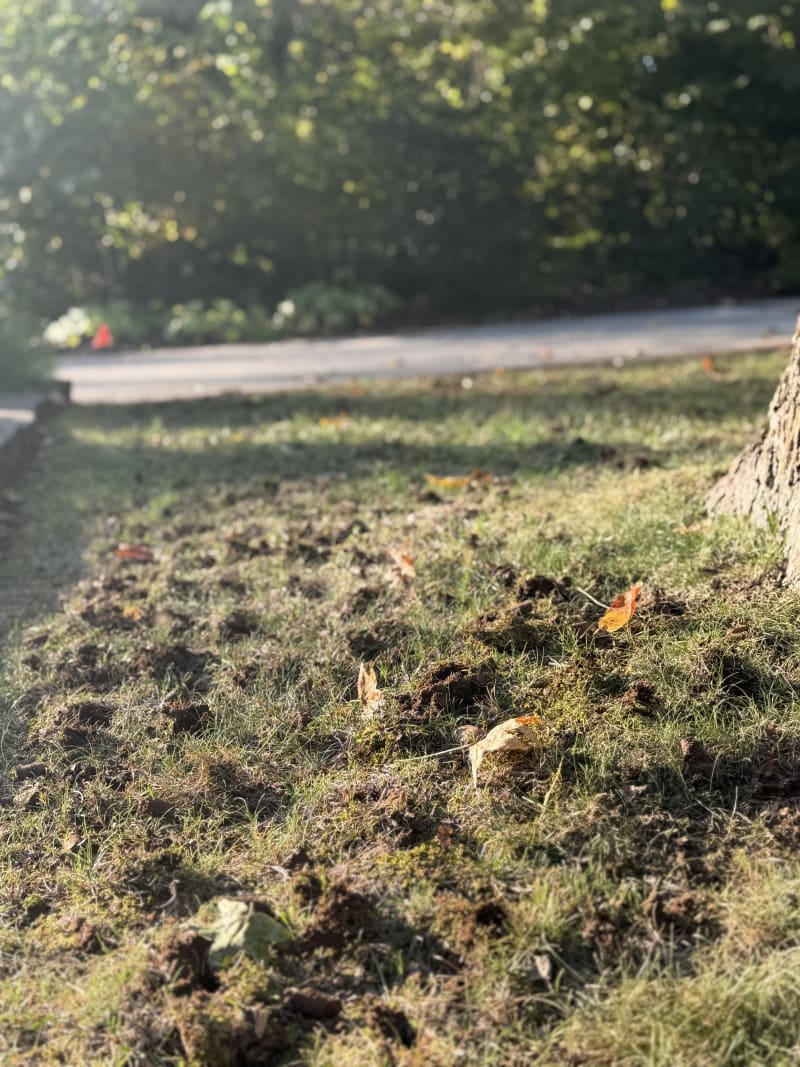
North Alabama clay changes character through the season. In May it's usually moist enough for tines to pull full-length cores. By August it can be close to brick. Clemson notes that tines typically reach 2 to 3 inches, and penetration depends on soil moisture as much as the machine. On dry clay you get shallow cores and less benefit.
If you're aerating late in the season, or it's been a dry stretch, water deeply a day or two ahead. Soaked is just as bad: Clemson warns that aerating wet soil is messy and adds compaction. If mud sticks to your shoes, wait.
Clemson also flags that freshly aerated turf dries out faster in drought. A lawn aerated in a hot, dry August needs its watering watched for the next couple of weeks.
What aeration won't do
Aeration isn't fertilizer, weed control or a drainage fix. It opens the soil so the rest of your care works better. A Bermuda lawn that's thin from shade will stay thin after aeration, because the problem is light, not soil.
Where to go from here
For what happens on the day and what you get with a warm-season visit, see our Bermuda & Zoysia aeration service. For the full-year calendar, see when to aerate a lawn in North Alabama. For the weeks after, see what to do after aerating.
Right now, in fall, Bermuda and Zoysia lawns are done for the year. The window opens again in mid/late April.