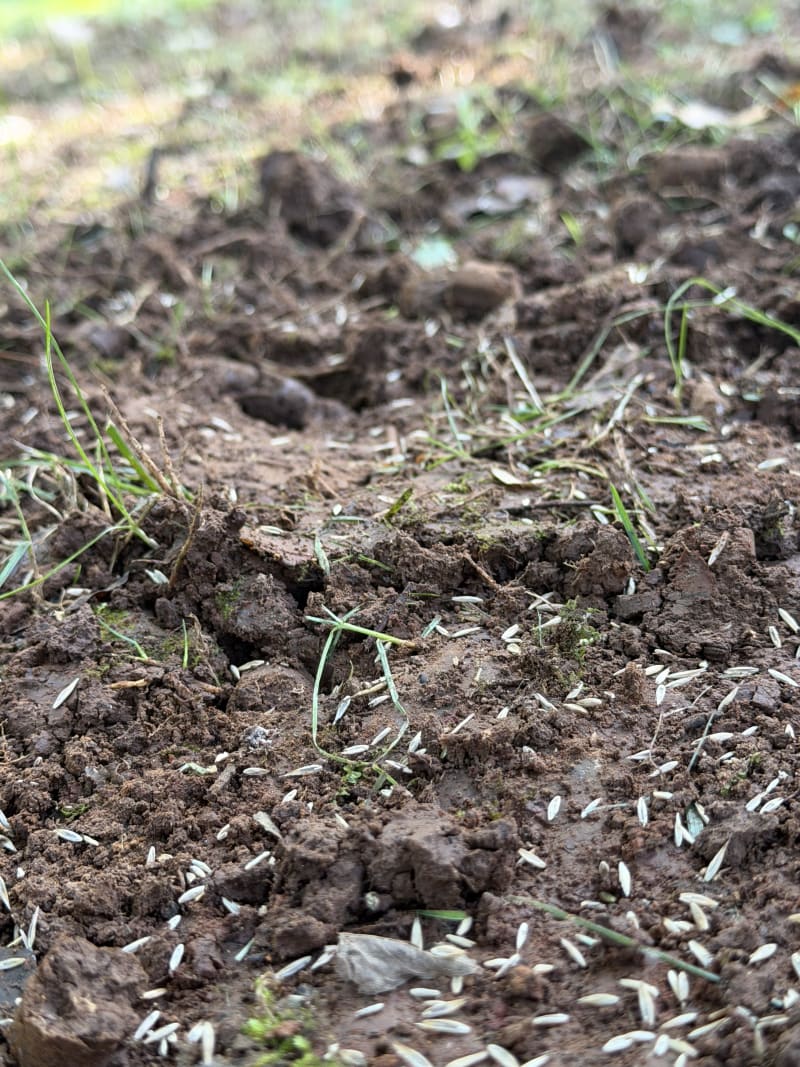
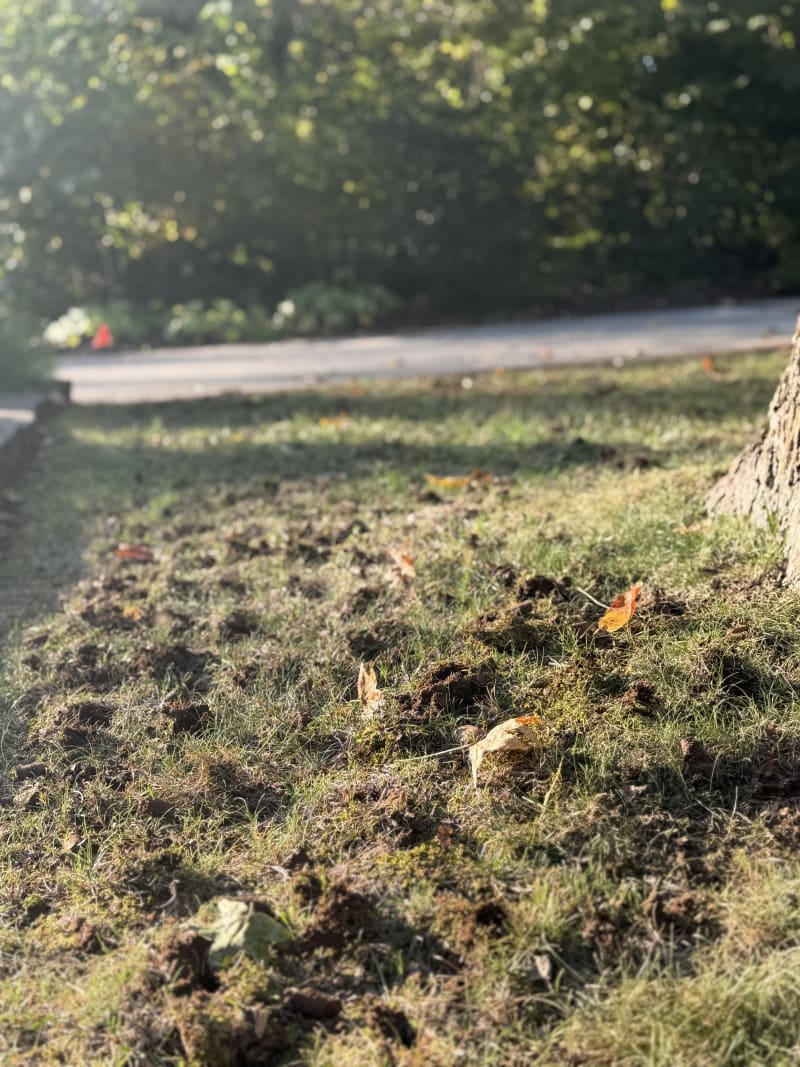
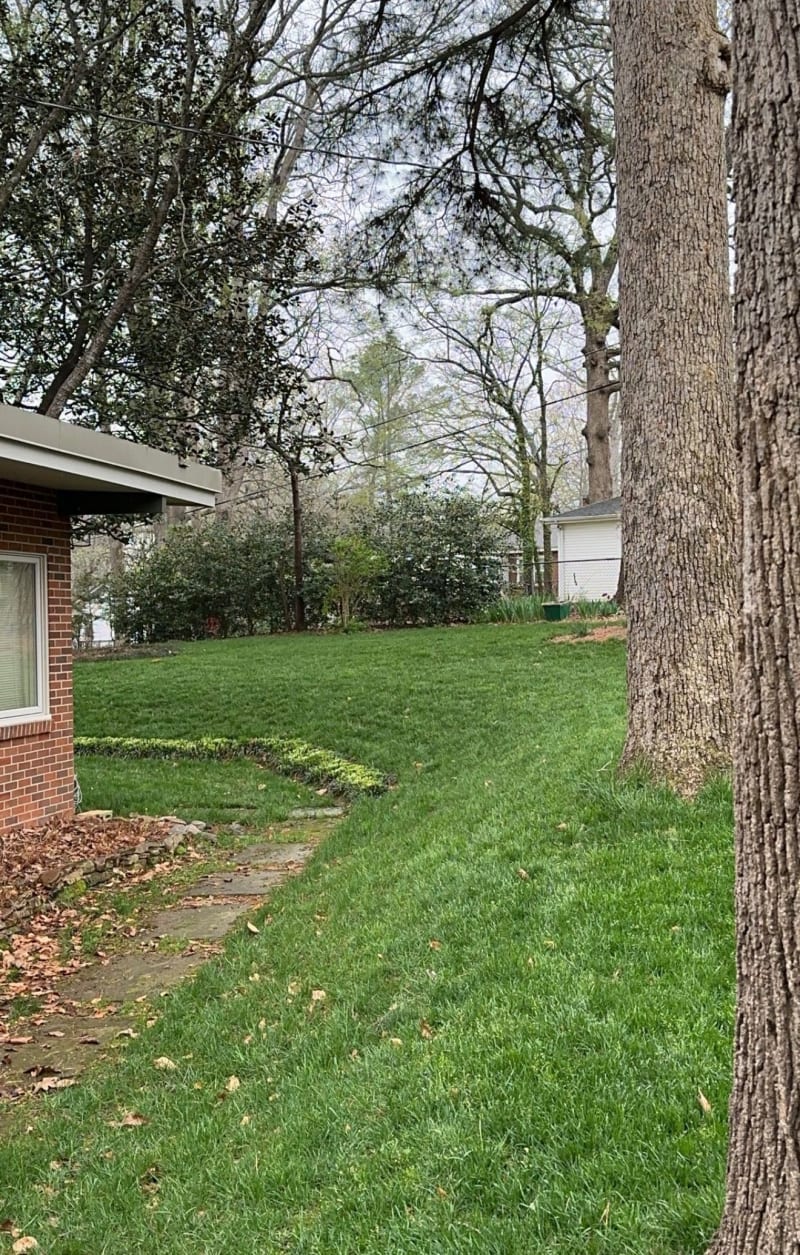
The short answer: core aeration pulls plugs of soil out of the ground. Spike aeration pushes a solid tine in and shoves the soil sideways. On North Alabama clay, that difference is the whole ballgame. Pulling cores relieves compaction. Spiking can add to it.
And if you're weighing renting a core aerator against hiring one, renting is a perfectly good call for plenty of yards. The honest breakdown is further down.
What a core aerator actually does
A core aerator drives hollow tubes (or spoon-shaped tines) into the lawn and flips the plugs of soil out onto the surface. Per Clemson Extension's aerating guide, the tines run from ¼ to ¾ of an inch wide, go 2 to 3 inches deep depending on the machine, and should be spaced 2 to 3 inches apart. Closer spacing pulls more soil and relieves compaction better.
That matters because compaction lives near the top. Clemson puts the problem in the top 4 to 6 inches of soil, where traffic, construction equipment and heavy rain squeeze out the air space. Water runs off instead of soaking in, roots stay shallow, and the grass thins.
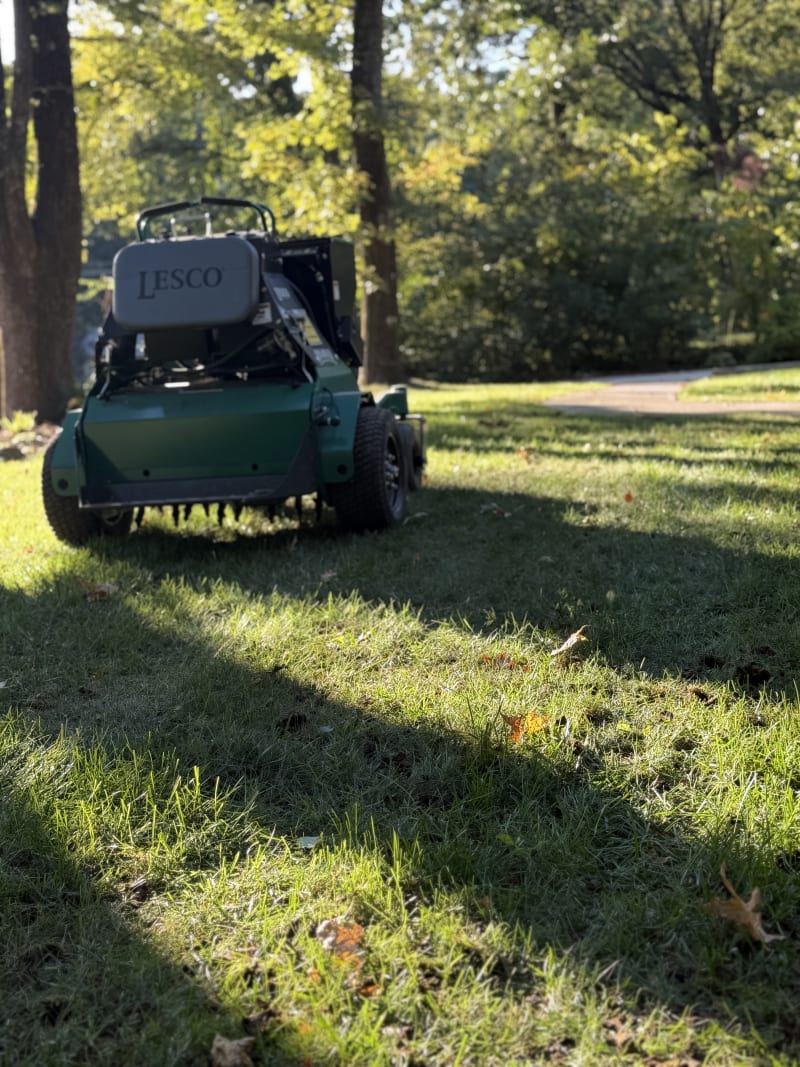
Pulling a core leaves an actual hole with room around it. Roots, water and air move into it, and the soil around it has somewhere to relax. The Alabama Cooperative Extension System calls core aerification "the most effective type of soil aeration" for exactly that reason.
Why spiking disappoints on clay
A spike aerator uses solid tines. Nothing comes out of the ground. The soil that was in the hole has to go somewhere, so it gets pressed into the walls and floor of the hole.
Clemson's turfgrass cultivation factsheet is blunt about it: spiking with solid tines "will increase compaction around the area where the tines enters the soil." Clemson limits it to saturated, heavily compacted soil, where the point is helping it dry out. That's a tool for one specific problem, not a fix for a thin home lawn.
Red clay makes this worse. Clay particles are tiny and pack tight. Press a spike into it and you get a neat hole with glazed, packed sides that water struggles to get through. The same goes for spiked lawn shoes and the rolling spike drums sold as tow-behind attachments. They poke holes. They don't remove soil.
Spikes aren't useless everywhere. They're quick, there's no cleanup, and on loose, sandy soil the downside is small. But most yards in Huntsville, Madison, Decatur and Hartselle aren't sandy.
How to tell if your lawn needs it at all
Before you rent anything or call anyone, check. Clemson gives a simple field test: push a screwdriver into moist soil. If it slides in with little resistance, you probably don't need to aerate. If it fights you, you probably do. Test after a rain or a watering, because dry clay resists a screwdriver whether it's compacted or not.
Walk the yard too. Clemson's description is hard to beat: if it feels like you're walking on concrete, compaction could be the problem. Worn paths, the strip beside the driveway, the dog's route along the fence and anywhere a builder's equipment sat are the usual suspects.
New construction deserves a special mention. UGA Extension notes that grading often strips the topsoil and leaves clay subsoil that "become[s] hardened and compacted when dry," and recommends cultivating that soil at least 3–4 inches deep. That describes a lot of newer subdivisions around Madison and Huntsville, where sod went straight onto packed subsoil.
Renting a core aerator: the honest version
People search for lawn aeration rentals in huge numbers, and there's a good reason. It's a job a handy homeowner can do. Clemson Extension points people to lawn and garden centers and equipment rental shops for exactly this.
Here's what the day actually involves.
Getting it home. A walk-behind core aerator is a heavy, top-heavy machine. It won't go in a car trunk. You need a pickup or a trailer, ramps, and ideally a second person for loading and unloading. Ask the rental shop to load it for you, and have a plan for unloading at home.
Running it. The machine pulls itself forward, but you steer it, turn it, and hold it back on slopes. Turning at the end of each row is where it fights you. Clemson recommends going over the lawn twice, the second time at a right angle to the first. So a quarter-acre lawn is really a half-acre of walking behind a machine that wants to go straight.
Soil moisture. This is where most rental days go sideways. Clemson says penetration depends on soil type, soil moisture, tine size, and the weight and power of the machine. A rental aerator on dry August clay may bounce along and pull stubby half-cores, or none at all. Too wet is also a problem. If soil sticks to your shoes, Clemson says wait, because aerating wet soil is messy and adds compaction. Moderately moist is the target. If it hasn't rained, water deeply a day or two before.
What's underground. Alabama 811 asks you to submit a free locate request 2 to 10 full working days before digging. Do it. But read the fine print: 811 says private lines such as irrigation systems, invisible pet fences, septic systems and propane lines are not marked. Those are exactly the lines a 2–3 inch tine is most likely to hit. Flag every sprinkler head, find where your pet-fence wire runs, and know where the septic lines go before the machine comes off the trailer.
Cleanup. Not much. Leave the cores on the lawn. Clemson says they break down with rain and traffic, and they carry microorganisms that help break down thatch. Mow over them or rake them in if the look bothers you.
When renting makes sense
- The yard is fairly flat and not huge.
- You have a truck or trailer and a helper.
- You know where your irrigation and pet-fence lines are.
- You can pick a day when the soil is moist, not dry and not soggy.
- You're up for a few hours of physical work.
If that's you, rent it. You'll get real cores and a real result.
And for small spots, like a worn path or the patch by the mailbox, you don't need a machine at all. Clemson suggests a hand sod-coring tool, which pulls cores like the big machine. A spading fork, pushed in at least 4 inches and rocked, loosens soil too, but Clemson notes it also packs the soil around each hole, the same trade-off as a spike.
When hiring makes more sense
- Hills, terraces or tight side yards where a heavy machine is hard to control.
- You don't have a way to haul it.
- Lots of irrigation, or lines you can't account for.
- Hard clay that needs a heavier machine and a well-timed day to get depth.
- You'd rather not spend a Saturday on it.
Timing matters more than the machine
A perfect core aerator on the wrong week does little. Aerate when the grass is actively growing so it can fill the holes fast. For fescue, that means early fall. For Bermuda and Zoysia, it's mid/late April through August. Our guide to when to aerate a lawn in North Alabama covers the calendar, and what to do after aerating covers the next few weeks.
One more timing trap: pre-emergent weed control. Clemson recommends aerating before a pre-emergent application, not after. Punching holes through that chemical barrier lets weeds through.
Be realistic
One aeration won't undo years of compaction. Clay packs back down. Clemson says heavy, poorly drained soils with a lot of traffic may need it several times a season, while lightly used lawns may go a couple of years between passes. The screwdriver test tells you which one you have.
Core aeration also won't fix a drainage problem built into the lot. Clemson makes a point of separating compacted soil from soil that's just naturally wet: low spots and heavy clay can hold water without being compacted, and that takes a different fix.
If you'd rather hand it off
If you've read this far and the rental list sounds like more hassle than it's worth, that's what we do. We run core aeration only, no spikes, for fescue lawns in fall and for Bermuda and Zoysia from mid/late April through August, across Huntsville, Madison, Decatur and Hartselle. For fescue, see fall aeration and overseeding.
If you'd rather do it yourself, pick the core machine, flag your lines, and water the day before. You'll do fine.